(Taken from Sri Simham Issue 9)
On the 18th day of Margazhi, Thiruppavai pasuram is “undhu mathakalitran” and the neivedyam for this day is Puliyodharai for Perumal prasadha samarpanam.
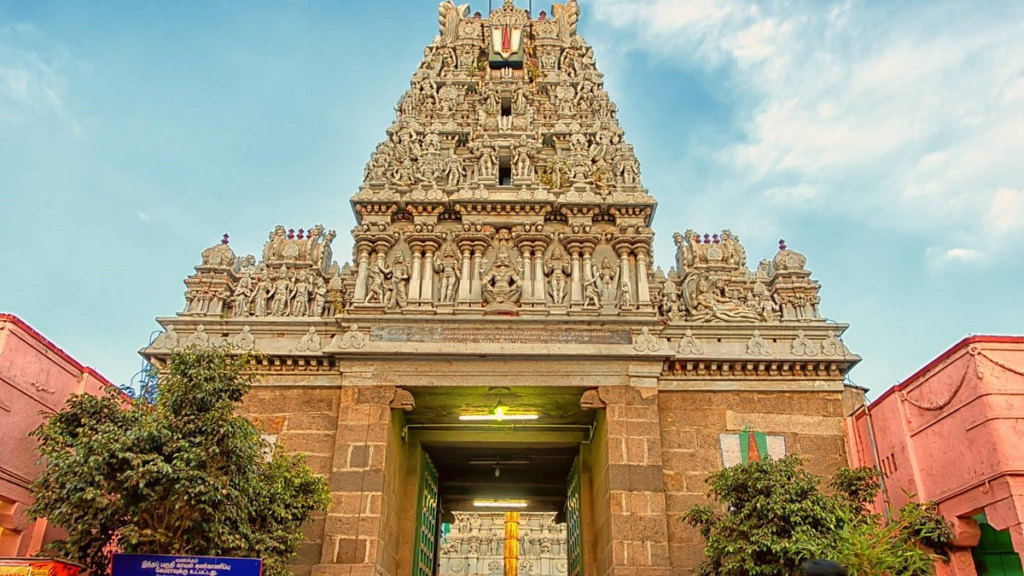
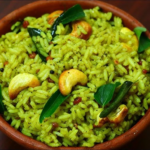
We can offer traditional Puliyodharai with a special recipe from Thiruvallikeni Parthasarathy Perumal.
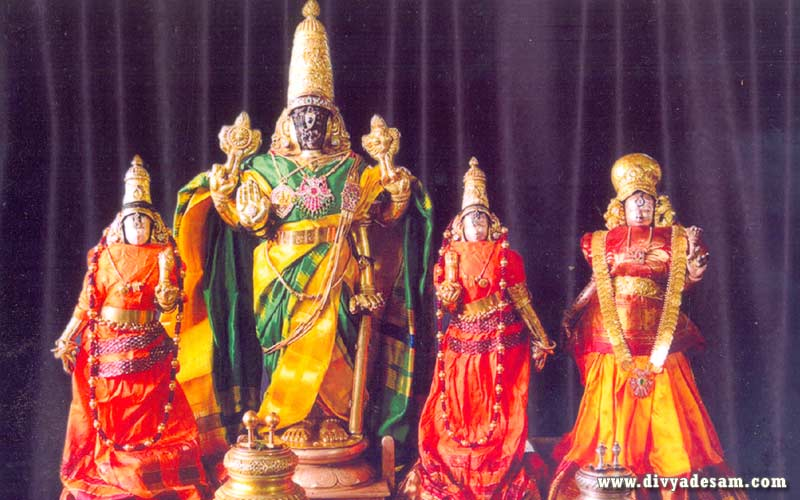
The thirumugam of the utsavar murti of Parthasarathy (Bhagavan Sri Krishna) has dark, smallpox-like marks. It is believed that the scars were due to the arrows of Bhishma aimed at Arjuna, but Bhagavan Sri Krishna took the arrows onto himself to protect Arjuna during the Mahabharata war.
Hence, the thirumeni and thirumugam of the utsavar is sensitiive to hear and therefore chillies and oil are avoided.
All preparations in the temple madapalli are made using ghee. Black pepper is used instead of chillies.
The only oil used in the temple is til/sesame/gingerly/nallennai oil to prepare puliyodharai because til oil is good for the skin.
Ingredients
Method
- Add gingerly oil to the kadaai and add mustard seeds when the oil is hot
- Once it splutters, add cumin seeds and fenugreek seeds
- Once the fenugreek seeds turn brown, add rock salt and tamarind juice and let is boil till the oil separates
- Add gingerly oil, chickpeas and urad dhal
- Once the dhals are golden brown, add cashew nuts. Usually, all other Perumal temples use peanuts, but not in the Parthasarathy temple
- Once the cashews turn golden, switch off the stove and add pulikaachal. When it is mixed well, add turmeric powder
- Cook rice, drain and keep aside
- Add pepper powder to the cooked rice and mix well
- Once done, add the tempered pulikaachal and mix well
- Finally, add raw curry leaves, instead of fried ones, to give it its unique taste and aroma. It is also healthy to eat the raw curry leaves. This is usually the traditional way of Paaramparya Puliyodharai
No responses yet