The event
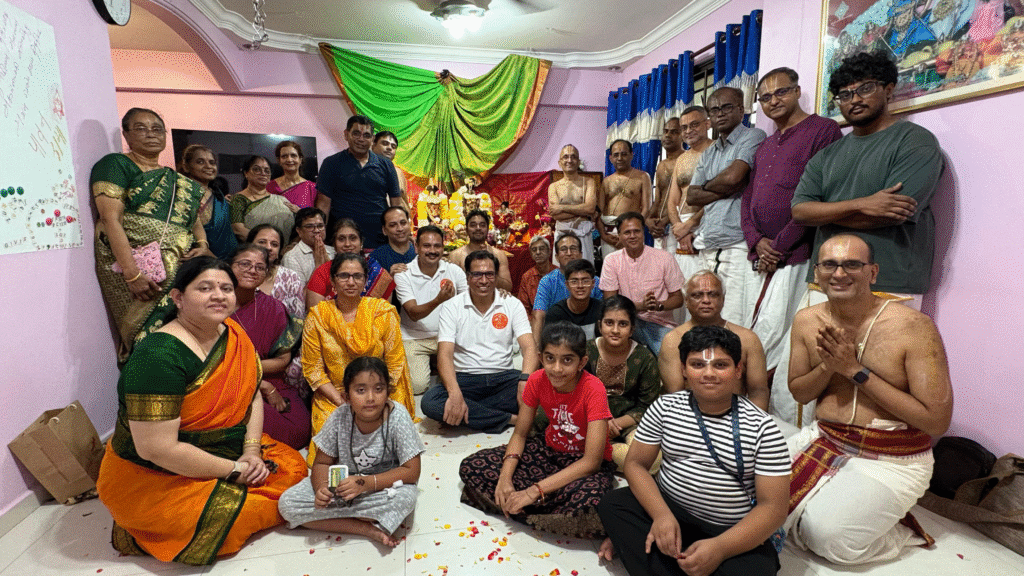
We had a fantastic event celebrating Mudal Azhwargal & Swami Manavala Maamunigal Vaibhavam at Sri. Thirunarayanan swami and Smt. Dhanalakshmi mami’s thirumaligai.
The bhagavathas recited Prabandhams of Mudal Azhwar and Manavala Maamunigal. The bhagavathas and rockers sang melodiously. Dhanyosmi to Dhriti, Vishwa, Srinidhi, Smt. Dhanalakshmi Mami, Sri. Sunil and Sri. Mukund swamis and the Andal goshti for their enjoyable singing.
We had a special guest today. We were graced with Sri. Madhavakkannan Swami, who gave a short talk on Oppilaa Aippasi Naalgal (Peerless Days of Tula Month). Swami gave practical tips from each thriruvandaadhi & extolled the acharyas – Sri Periyavachanpillai and Sri Manavala Mamunigal and their works.
The bhagavathas relished divine and sumptuous prasadam. Dhanyosmi to Sri. Thirunarayanan swami, Smt. Dhanalakshmi Mami and Chi. Srivatsan for organising this memorable event, and to all the bhagavathas who participated.
About Mudhal Azhwargal
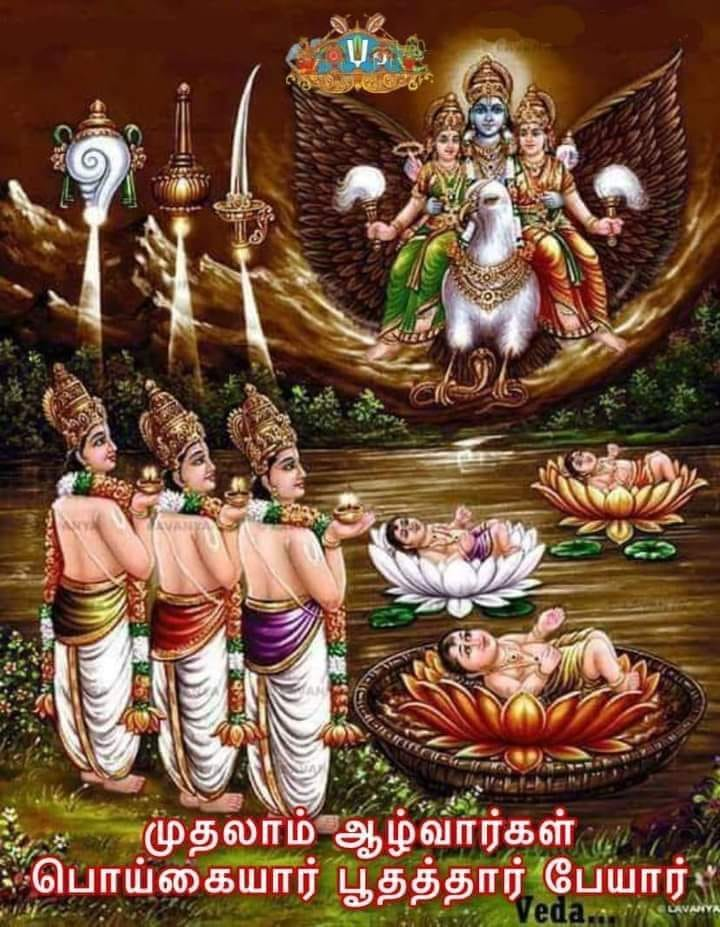
The Mudhal Azhvargal, Poigai Azhvar, Bhoothathazhvar, and Payazhvar, are revered as the first three Azhvars, the earliest saints of the Sri Vaishnava tradition. They were born on three consecutive days in the Siddharti year, Aippasi month. Unlike ordinary births, they divine beings emerged miraculously from flowers, and are therefore called Ayonjiyas, those not born from a womb.
Each one of the Azhvar is considered an amsam of Perumal’s sacred weapons. Pogaiazhvar was the manifestation of Panchjanyam, the divine conch of Mahavishnu and he emerged from a lotus flower on Thiruvonam nakshatram in a pond at Kanchipuram. Bhoothathazhvar was an incarnation of the Kaumodaki, the Lord’s divine mace of Mahavishnu. He emerged from the kurukkaththi flower in a garden in Mahabalipuram on Avittam nakshatram. Peyazhvar, the third, was the embodiment of Nandaki, the celestial sword and arose from a sevvalli, red lilly, on Sadhayam nakshatram in a well of Adhikesava perumal koil in Thirumyilai.
Together, these three azhvars were instrumental in kindling the flame of devotional poetry in Tamil. In the order of their births, each composed a set of 100 verses, Mudhal Thiruvandhadhi, Irandam Thiruvandhadhi, and Mundram Thiruvandhadi respectively. These profound hymns laid the foundation for the sacred collection of 4,000 tamil verses known as Nalayira Divyaprabandham, which continues to inspire devotees to this day.
About Manavala Maamunigal
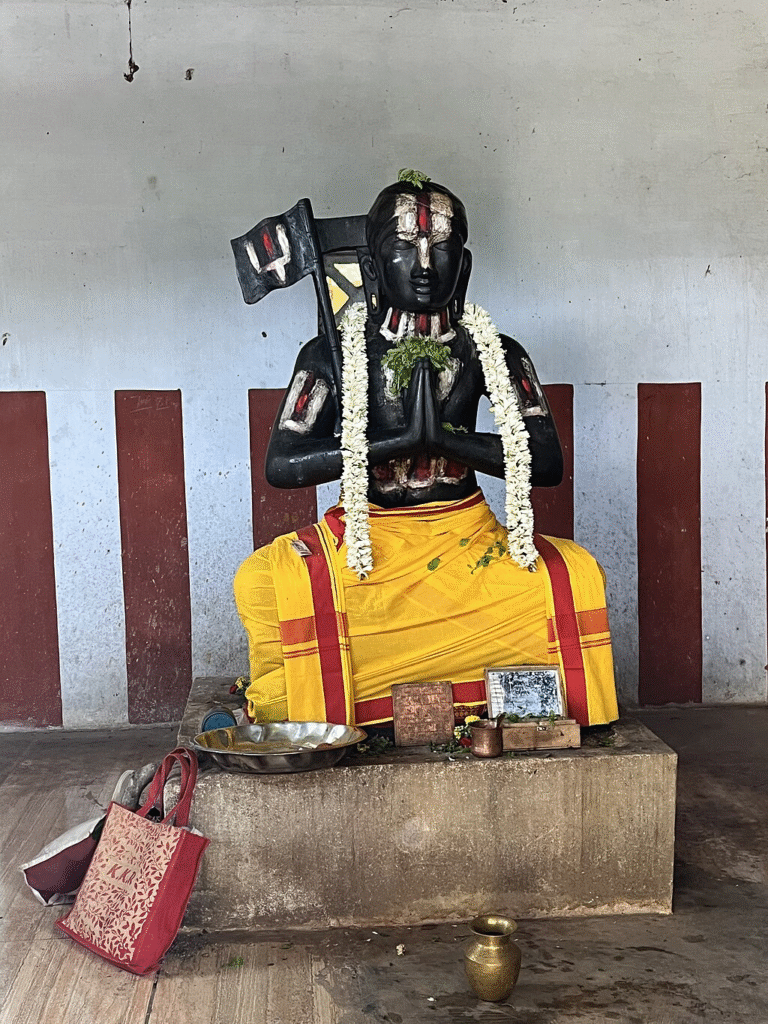
Manavala Maamunigal was born in 1370 CE in Azhvarthirunagari, Tamil Nadu, to Tigalakidanthan Thiruvaveerudaiya Piran Tadar and Sriranga Nachiyar. Named Azhagiya Manavalan after Lord Ranganatha of Srirangam, he studied the Vedas, Vedantas and the Nalayira Divya Prabandham under his father and maternal grandfather Kollikavala Dasar. Later, he became a disciple of the great teacher, Tiruvaymozhipillai, who guided him in temple service and spiritual learning. During this time, he wrote the Yathiraja Vimsati, a hymn praising Sri Ramanuja.
After the passing of his teacher, Manavala Mamunigal took it upon himself to spread the message of Sri Vaishnavism. Upon moving to Srirangam, he found that the temple there was in decline after years of turmoil. With great dedication and wisdom, he restored the temple’s rituals, traditions, and administration, reviving it as the heart of Sri Vaishnava worship. He also travelled to holy places like Thirumala, Kanchipuram, and Sri Perumputhur, teaching philosophy and writing devotional hymns such as Devaraja Mangalam, which glorifies the Varadharaja Perumal in 13 verses.
As his life progressed, he devoted more of his time to writing commentaries and teaching the philosophies of Sri Vaishnavism. His original works explained the philosophy of devotion and the teaching of earlier saints. His students, known as Ashtadiggajas, the Eight Great Disciples, helped spread his teaching to the wider community. Even today, Sri Vaishnavas around the world regard him as one fo the greatest teachers after Ramanuja, and his prayer “Sri Sailesa Dayapattram” is still recited daily in many Vishnu temples.
No responses yet